



 By
By By Elizabeth Ugbo
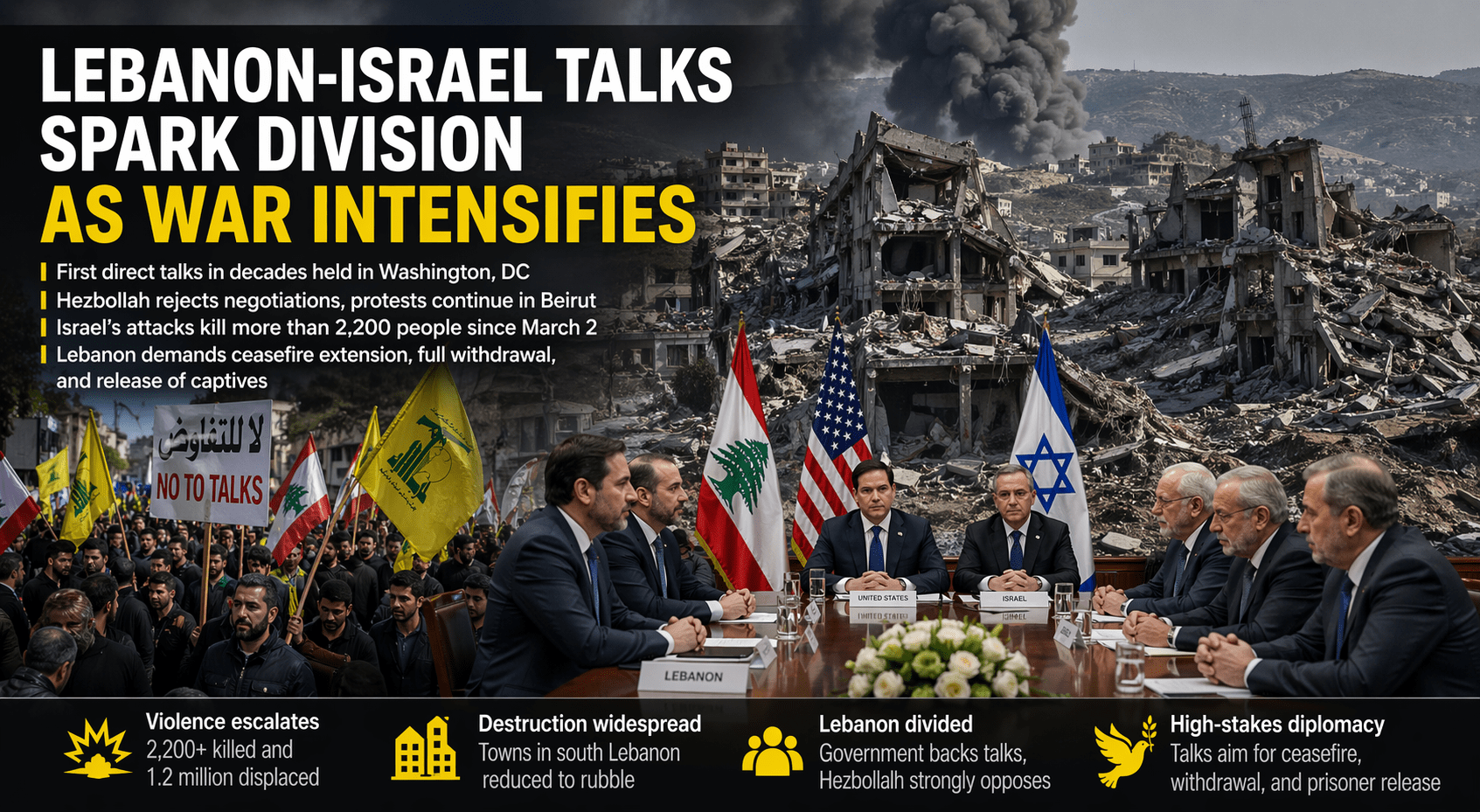
Lebanon and Israel have entered rare direct talks in Washington, DC, on April 24, 2026, to address ongoing conflict. The negotiations involve diplomats from both countries, alongside US officials, aiming to secure a ceasefire, Israeli withdrawal, and prisoner exchange. However, deep divisions within Lebanon, rejection by Hezbollah, and continued Israeli attacks complicate progress.
Rising Tensions Ahead of Talks
The negotiations come amid escalating violence between Israel and Lebanon. On March 2, Israel intensified its military campaign after Hezbollah launched retaliatory attacks. The group cited ongoing Israeli strikes and the killing of Ali Khamenei as triggers.
Since then, Israeli operations have killed over 2,200 people and displaced more than 1.2 million residents. Additionally, Israeli forces established a 10km buffer zone, restricting civilian returns and demolishing border communities.
Lebanon’s Strategy and Demands
Lebanon’s government seeks an extension of the ceasefire before continuing negotiations. Prime Minister Nawaf Salam also demands a full Israeli withdrawal and the release of Lebanese detainees.
Meanwhile, lawyer Fouad Debs argued that Lebanon lacks leverage in the talks. He suggested alternative legal routes, including filing cases at the International Criminal Court. According to him, diplomatic efforts alone may favor Israel.
Internal Divisions Deepen
The talks have exposed sharp divisions within Lebanon. The government recently declared Hezbollah’s military activities illegal, increasing political tension.
Hezbollah has rejected the negotiations outright. It insists that armed resistance remains Lebanon’s strongest leverage. Similarly, hundreds of protesters in Beirut demonstrated against the talks earlier in April.
Some citizens believe Iran could negotiate more effectively on Lebanon’s behalf. Others argue that Israel rarely honors agreements, making talks unreliable.
Destruction Across Southern Lebanon
Recent visits to southern towns such as al-Mansouri, Majdal Zoun, and Qlaileh reveal widespread destruction. Buildings lie in ruins, and entire communities have been displaced.
Israeli strikes continue despite the ongoing negotiations. On Wednesday, attacks killed five people, including journalist Amal Khalil. Another strike on Thursday reportedly killed three more, according to Lebanon’s Health Ministry.
High-Stakes Diplomacy in Washington
The talks in Washington mark the first direct negotiations between Lebanon and Israel in decades. Officials present include US Secretary of State Marco Rubio and key ambassadors from both sides.
However, fear and uncertainty surround the process. One Lebanese shop owner in Beirut declined to comment, citing safety concerns. His reaction reflects widespread anxiety and political polarization.
Uncertain Path Forward
Lebanon faces a difficult choice. Some leaders see diplomacy as the only viable option. Others believe resistance offers a stronger path.
As violence continues, the outcome of these talks remains uncertain. The divide within Lebanon may prove as challenging as the conflict itself.