



 By
By By Elizabeth Ugbo
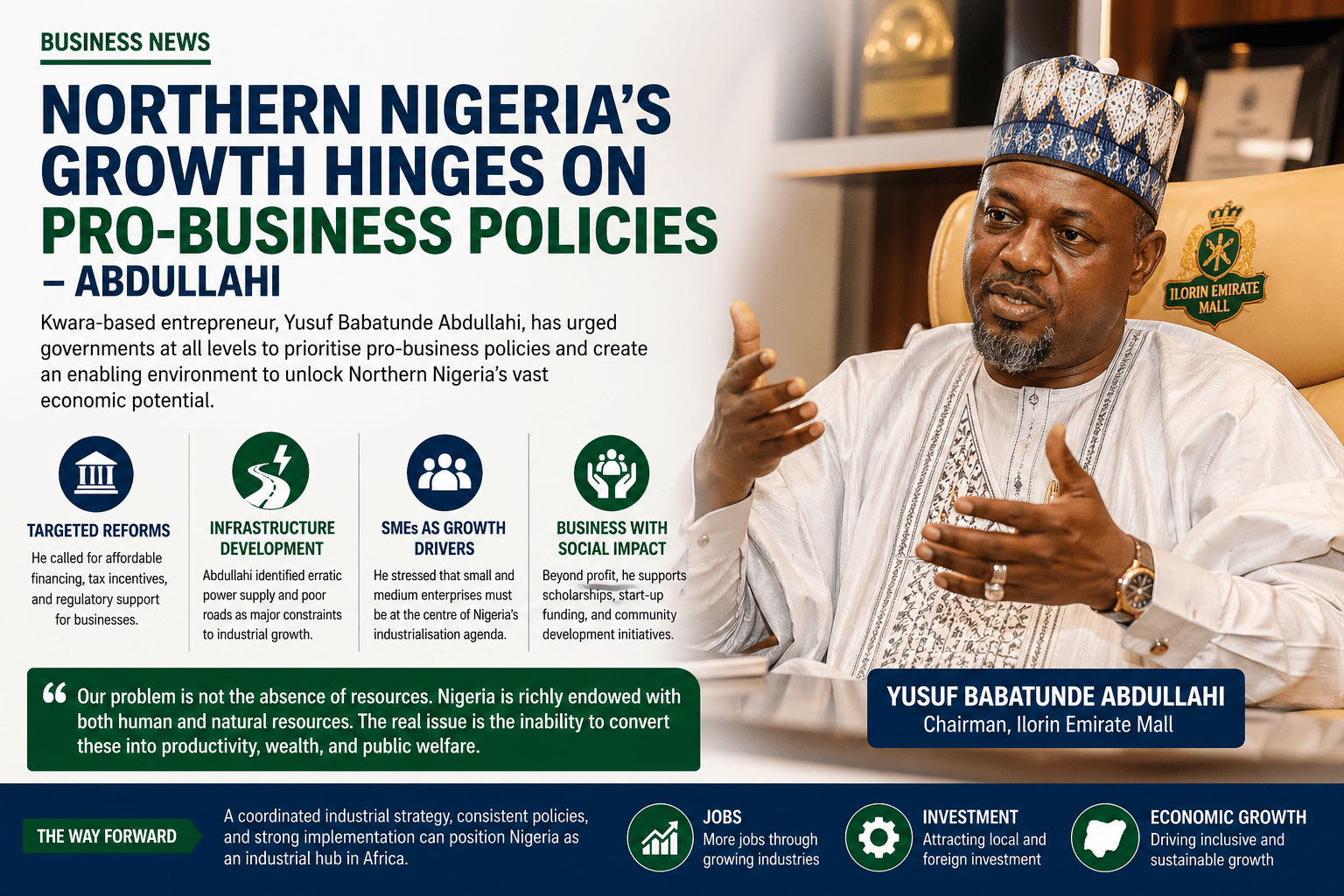
A Kwara-based entrepreneur, Yusuf Babatunde Abdullahi, has urged governments at all levels to adopt pro-business policies to unlock Northern Nigeria’s economic potential. He made this call in Ilorin during an interview with Arewa PUNCH, stressing that targeted reforms, infrastructure upgrades, and SME support can drive industrial growth and job creation.
Why Nigeria Needs Urgent Policy Reforms
Abdullahi argued that Nigeria must adopt a clear industrialisation strategy. He said fragmented policies and weak execution continue to slow progress.
According to him, policymakers should act quickly. They need to introduce affordable financing and tax incentives. They should also simplify regulations to help businesses grow.
“These reforms should include low-interest loans, tax holidays, and structured repayment plans,” he explained.
He added that duty-free importation of manufacturing equipment would also boost production.
Infrastructure Remains a Major Barrier
However, Abdullahi pointed to poor infrastructure as a key challenge. He noted that unreliable power supply disrupts production. Bad road networks also increase business costs.
“If we fix basic infrastructure, businesses will grow faster,” he said. “They will also contribute more to the economy.”
As a result, he urged authorities to prioritise power and transport systems.
SMEs Must Drive Industrialisation
Abdullahi emphasised the importance of small and medium-scale enterprises (SMEs). He described them as engines of job creation and economic expansion.
Therefore, he called for policies that place SMEs at the centre of Nigeria’s industrial agenda. He believes this approach will accelerate inclusive growth.
From Business Success to Community Impact
Reflecting on his journey, Abdullahi said his investments span oil and gas, real estate, and retail. He highlighted the Ilorin Emirate Mall as a project aimed at boosting local development.
Beyond profits, he stressed the need for social responsibility. He said he has supported communities through scholarships and start-up funding.
“Business success should align with community development,” he noted. “That is the legacy I want to leave.”
Nigeria’s Real Problem: Structural Inefficiency
Abdullahi also challenged common assumptions about Nigeria’s economy. He said the country does not lack resources.
“Our problem is not resources,” he explained. “The issue is converting them into productivity and public welfare.”
He believes stronger systems and better policy execution will solve this gap.
The Way Forward
In conclusion, Abdullahi called for a coordinated, multi-layered industrial strategy. He stressed that consistent policies and strong implementation remain essential.
If Nigeria gets this right, he said, it can become a major industrial hub in Africa.