



 By
By By Elizabeth Ugbo
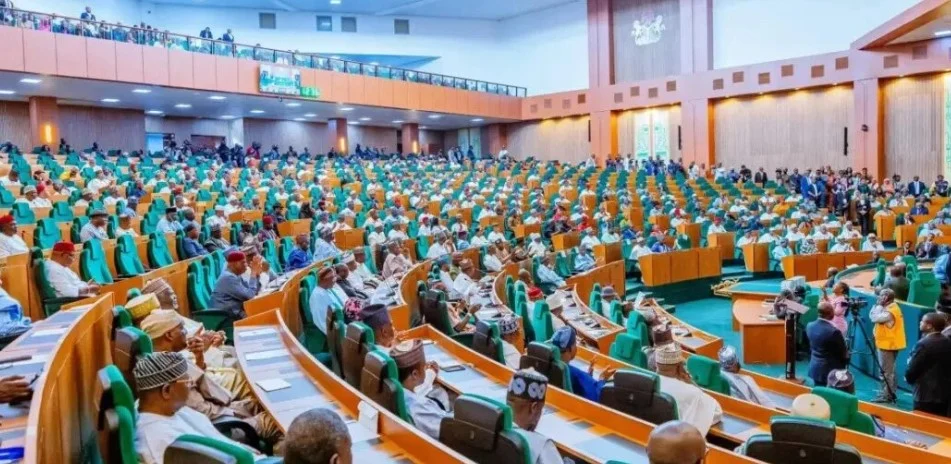
The House of Representatives on Wednesday urged the Federal Government to end the rehabilitation and reintegration of repentant terrorists, kidnappers and bandits into society during plenary in Abuja. Lawmakers adopted the resolution after considering a motion sponsored by Ademorin Kuye, who represents Shomolu Federal Constituency of Lagos State. The House said the policy could undermine efforts to tackle insecurity and weaken public confidence.
Lawmakers Seek End to Rehabilitation Programme
Moving the motion, Kuye called on the Federal Government to dismantle what he described as Nigeria’s ransom-cash economy. He also urged authorities to strengthen financial intelligence coordination and enforce anti-money laundering regulations.
According to him, reports from the National Bureau of Statistics and independent security research organisations showed that Nigerians paid about N2.23 trillion in ransom between January 2021 and June 2025.
Kuye said investigations by the National Counter Terrorism Centre under the Office of the National Security Adviser revealed that point-of-sale operators and other financial channels facilitated ransom payments. He noted that these methods made financial tracking and criminal investigations more difficult.
He added that criminal groups also relied on bureau de change operators, cryptocurrency platforms, livestock transactions and trade-based money laundering schemes to conceal ransom proceeds.
Furthermore, he warned that weak financial intelligence coordination and poor enforcement of anti-money laundering laws had worsened insecurity. He said the situation had reduced public confidence and increased the risk of international sanctions, including Nigeria’s continued placement on the Financial Action Task Force (FATF) grey list.
Debate Over Criminalising Ransom Payments
The motion generated mixed reactions on the House floor.
Bamidele Salam, Chairman of the House Committee on Public Accounts, opposed any move to criminalise ransom payments. He argued that the government must first guarantee the safety of citizens before imposing such restrictions.
Salam questioned whether it would be fair to punish families who paid ransom to secure the release of kidnapped relatives.
Gagdi Pushes for Tougher Measures
However, Yusuf Gagdi, Chairman of the House Committee on Navy, supported the motion. He argued that ransom payments encouraged kidnappers and bandits to continue their crimes.
Gagdi proposed an amendment urging the Federal Government to immediately stop rehabilitating and reintegrating terrorists, kidnappers and bandits into communities.
“Anybody who kills deserves to be killed, except in cases such as a motor accident, where the law is clear. But if you invade innocent Nigerians’ homes, kidnap them, take them into the bush, torture them before taking their lives, including those of traditional rulers, you don’t deserve one second of survival,” he said.
The House unanimously adopted his amendment through a voice vote conducted by Speaker Tajudeen Abbas.
Lawmakers Raise Security Concerns
During the debate, another lawmaker alleged that some rehabilitated former insurgents could be supplying intelligence to criminal groups. He argued that such actions might contribute to attacks on security personnel during military operations.
Also contributing, Ahmadu Jaha, who represents Damboa/Gwoza/Chibok Federal Constituency of Borno State, said only families that had experienced kidnapping truly understood its emotional and psychological impact.
Jaha asked whether lawmakers opposing ransom payments would maintain the same position if their own family members became victims of abduction.
Senate Also Calls for Policy Review
The House resolution came one day after the Senate urged the Federal Government to discontinue the rehabilitation programme for repentant Boko Haram members.
The Federal Government introduced the initiative in 2016 through Operation Safe Corridor, a military-led programme designed to rehabilitate and reintegrate defectors from terrorist groups into society.
Lawmakers believe ending the programmed would strengthen Nigeria’s fight against terrorism and restore public confidence in the country’s security strategy.