



 By
By By Elizabeth Ugbo
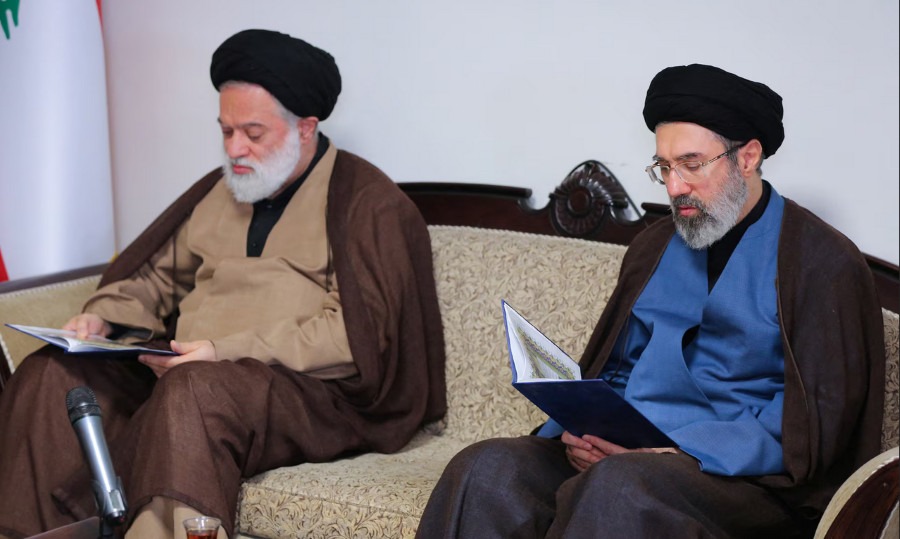
Mojtaba Khamenei, 56, has emerged as a leading contender to succeed his father, Ayatollah Ali Khamenei, as Iran’s supreme leader after he was killed in US-Israeli missile strikes in Tehran on Saturday. The Assembly of Experts will decide the next leader. The transition comes amid rising regional tensions and international threats. Several hardline clerics are also in the race.
US Sanctions and Allegations
In 2019, the US Treasury sanctioned Mojtaba Khamenei during President Donald Trump’s first term. Officials accused him of representing his father’s office without holding an elected position.
The Treasury stated that Ali Khamenei delegated parts of his authority to his son. It claimed Mojtaba worked closely with Iranian security forces. Authorities alleged he advanced destabilising regional and domestic policies.
Opponents also accused him of involvement in the 2009 crackdown. That unrest followed the disputed re-election of Mahmoud Ahmadinejad. The protests became one of Iran’s largest political movements.
Wealth and Foreign Investments
A Bloomberg investigation reported that Mojtaba Khamenei controls wealth exceeding $100 million. The report cited anonymous sources and Western intelligence assessments.
According to the investigation, oil revenues funded luxury real estate in Britain. Investments also included European hotels and property in Dubai. Shell companies in tax havens allegedly managed the assets.
Religious and Political Influence
Mojtaba studied theology in Qom, south of Tehran. He later taught religious studies there. He attained the rank of Hujjat al-Islam, a mid-level clerical title.
Unlike his father and revolutionary founder Ruhollah Khomeini, he never reached the rank of Ayatollah. However, many observers describe him as highly influential behind the scenes.
He maintains close ties with Iran’s Revolutionary Guards. That relationship dates back to his service during the Iran-Iraq war. As a result, conservatives strongly support him.
Leadership Transition Process
The Assembly of Experts, an 88-member clerical body elected every eight years, will select the next supreme leader. So far, it has managed only one transition. Members chose Ali Khamenei in 1989 after the death of Ruhollah Khomeini.
Ahmad Khatami, a member of the body, said voting could occur at the earliest opportunity. Other potential contenders include Alireza Arafi, Mohsen Araki, and Hassan Khomeini.
Israeli and US Reactions
Israel’s Defence Minister Israel Katz warned that any successor would become a target. He stated that Israel would pursue leaders who threaten its security.
Meanwhile, US President Donald Trump commented publicly on Iran’s future leadership. He warned that another anti-US leader would represent the worst-case scenario.
Luciano Zaccara of Qatar University said Iran’s political system prepared for such a possibility. According to him, command structures remain intact despite the assassination.
A Controversial Succession
Mojtaba Khamenei would represent a hereditary transition. Notably, his father publicly rejected dynastic succession in 2024.
Iran ended its centuries-old monarchy in 1979. Therefore, many citizens remain sensitive to any sign of political inheritance.
Despite limited public appearances, Mojtaba remains a powerful figure. His future now depends on the Assembly of Experts’ decision.