




 By
By By Elizabeth Ugbo
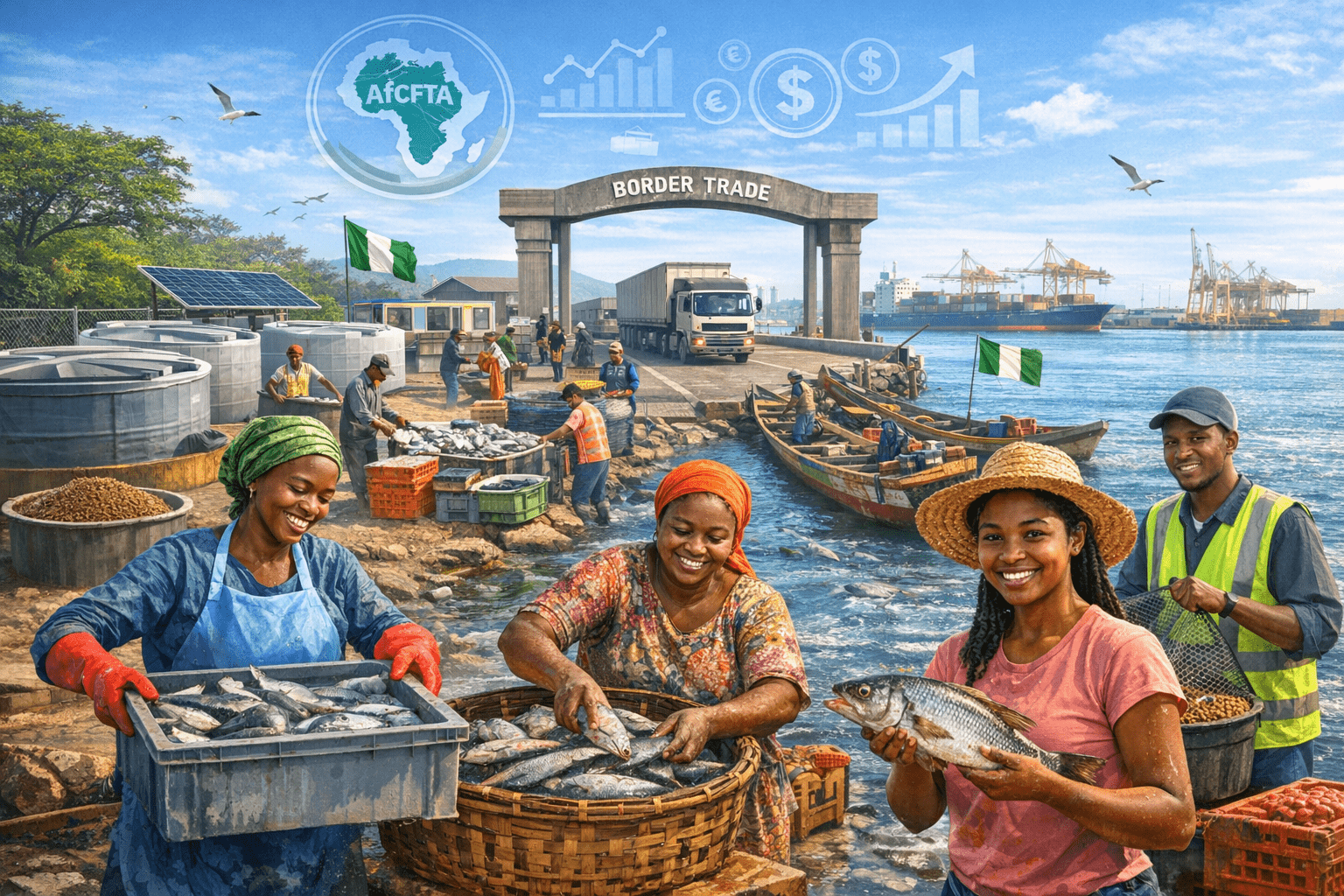
Nigeria has intensified efforts to strengthen its fisheries and aquaculture sector by empowering women and youth through inclusive trade and market access. At the Nigeria National Fisheries Stakeholders’ Forum held in Lagos, the Federal Ministry of Marine and Blue Economy, alongside AfCFTA partners, outlined new strategies to improve cross-border trade, expand job opportunities, and boost food security. The forum, themed “Strengthening Inclusive and Sustainable Fisheries, Aquaculture and Blue Economy for Job Creation in Nigeria,” brought together government officials, development partners, investors, and researchers to discuss how coordinated policies, financing, and technology can unlock the sector’s full potential.
Nigeria Seeks Stronger Fisheries Value Chain
The Federal Ministry of Marine and Blue Economy called for coordinated action to reposition Nigeria’s fisheries and aquaculture subsector.
Permanent Secretary Fatima Sugra T. Mahmood said the sector must move beyond simple production. Instead, it should build a strong and inclusive value chain.
She explained that the government aims to strengthen nutrition, create jobs, and improve economic resilience through fisheries.
Mahmood also stressed that collaboration remains critical. Federal, state, and local governments must work closely with development partners, investors, financial institutions, and cooperatives.
According to her, the federal government continues to introduce reforms that will unlock the potential of Nigeria’s marine and blue economy.
These reforms also align with Nigeria’s commitment to maximise opportunities under the African Continental Free Trade Area (AfCFTA).
AfCFTA Programme Targets Women and Youth
The Women and Youth Economic Empowerment in the Fisheries Sector through the Inclusive Market Access Programme drives this initiative.
The AfCFTA Secretariat leads the five-year programme running from 2024 to 2029. Partners include Mastercard Foundation, WorldFish, and TradeMark Africa.
The programme aims to empower women and youth across several African countries. These include Nigeria, Kenya, Uganda, Tanzania, Zambia, the Democratic Republic of Congo, Comoros, and Cabo Verde.
Importantly, the initiative seeks to create more than 242,000 decent jobs across the fisheries value chain.
It will also improve business skills, increase market access, and support inclusive economic growth.
TradeMark Africa Focuses on Market Barriers
Anataria Uwamariya, Director of Business Competitiveness and Board member at TradeMark Africa, said the organisation plans to engage key stakeholders across Nigeria’s fisheries sector.
She explained that the programme will examine barriers affecting women in the fisheries value chain.
According to her, the project will focus on improving cross-border trade conditions and reducing trading costs.
“We want to understand the barriers that women face when trading across borders,” she said.
She also emphasised the importance of productivity and financing.
Access to finance, she noted, remains a major challenge for many women in the sector.
AfCFTA Highlights Cross-Border Trade Opportunities
Themba Khumalo, Head of the Private Sector Unit at the AfCFTA Secretariat, said fish trade across African borders holds significant potential.
He explained that stronger trade could expand markets, stabilise prices, and increase incomes.
Furthermore, efficient border processes and harmonised standards will improve regional food security.
Khumalo added that the AfCFTA market offers economies of scale for fisheries investments.
“Nigeria has always been a fishing country,” he said. “However, we must also look beyond national borders.”
He noted that many African markets demand fish products and fish feed. Therefore, improved trade systems can unlock these opportunities.
Digital Solutions and Data Key to Growth
Development partners also emphasised the role of technology in improving trade efficiency.
Dr Charles Iyangbe, Country Representative for WorldFish, said digital solutions will help reduce transaction delays and improve transparency.
He added that reliable data and innovative financing tools will support fisheries businesses.
“We want to identify barriers to trade and simplify participation, especially for youth and women,” he said.
Iyangbe explained that women and youth remain the main actors within the fisheries sector.
Their participation, he said, directly supports food security across Africa.
Government Expands Support for Women and Youth
The Federal Department of Fisheries and Aquaculture continues to prioritise women and youth in its programmes.
The ministry has already distributed several production inputs to beneficiaries.
These include improved smoking kilns, fingerlings, fish feed, fibre-glass tanks, and collapsible tanks.
These interventions aim to increase productivity, reduce post-harvest losses, and raise incomes.
Mahmood also highlighted the wider benefits of women’s economic empowerment.
When women succeed in business, families often enjoy improved nutrition and education outcomes.
Communities also become more resilient.
Challenges Still Affect Fisheries Development
Despite progress, stakeholders acknowledged several persistent challenges.
Women and youth still struggle with limited access to affordable finance.
They also face poor infrastructure, post-harvest losses, and limited access to modern technology.
Weak bargaining power in markets remains another major obstacle.
Stakeholders agreed that solving these challenges will help Nigeria achieve inclusive and sustainable fisheries growth.