



 By
By By Elizabeth Ugbo
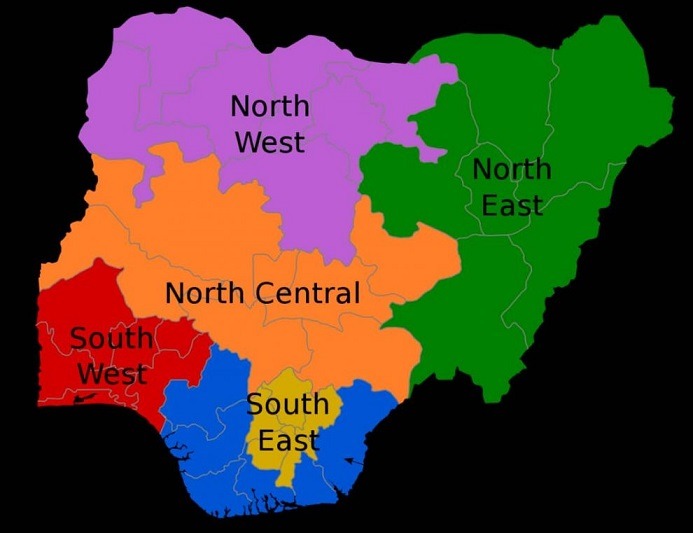
Since Nigeria returned to democracy in 1999, politicians have loudly defended zoning at the national level. Yet, at the state level, many ignore it. Power rotation remains selective across states like Kwara, Benue, Niger, Kogi, and Ogun. Over the past 26 years, political convenience has often overridden fairness. Informal arrangements continue to exclude entire communities.
The Double Standard in Nigeria’s Zoning Debate
Zoning remains one of Nigeria’s most debated political principles. At the federal level, leaders demand fairness and rotation. However, many abandon these ideals at home.
This contradiction weakens their credibility. A governor who excludes groups locally cannot claim fairness nationally. As a result, zoning becomes a tool of convenience, not justice.
Benue State: A Clear Case of Exclusion
Benue State highlights this imbalance. Since 1999, only Tiv politicians have governed the state. Leaders like Samuel Ortom, George Akume, and Hyacinth Alia all come from the same group.
Meanwhile, the Idoma people have not produced a governor in the democratic era. This exclusion contradicts the same fairness Benue politicians demand in Abuja.
Kwara State: The Marginalisation of Kwara North
In Kwara, power has rotated between Kwara Central and Kwara South. However, Kwara North has never produced a governor.
As 2027 approaches, demands for inclusion are growing louder. Yet, zoning advocates remain silent. This silence exposes selective activism.
Ogun State: Rotation or Political Engineering?
Ogun presents a more complex situation. Governor Dapo Abiodun’s endorsement of a successor raises questions.
Is this true rotation or political control? While it may appear balanced, the outcome could still sideline certain communities.
Niger State: A Working Model with Gaps
Niger State offers a structured zoning system. The governorship rotates among three senatorial zones.
This approach ensures balance and prevents long-term exclusion. However, it is not perfect. Christians in the state have rarely held key executive roles, including deputy governor.
Thus, geographic rotation alone does not guarantee full inclusion.
Kogi State: Breaking Old Political Barriers
Kogi State tells a different story. For years, the Igala dominated the governorship.
That changed when Yahaya Bello, an Ebira politician, became governor. His tenure broke a long-standing political pattern.
Now, with Usman Ododo in office, attention shifts to Kogi West. Equity demands that power moves there next.
The Problem with Informal Zoning
Across Nigeria, many states rely on informal zoning agreements. Initially, these arrangements seem fair.
However, over time, they become rigid traditions. Eventually, they exclude entire communities.
Without formal rules, political actors can easily abandon agreements when convenient.
Why National Zoning Lacks Credibility
The biggest issue is hypocrisy. Politicians demand zoning in Abuja but ignore it at home.
This inconsistency undermines the entire argument. Nigerians can see the gap between words and actions.
As a result, public trust continues to decline.
The Way Forward: Formalising Equity
The solution is clear. States must formalise zoning arrangements. They should:
- Rotate power among senatorial zones
- Include religious and ethnic representation
- Embed agreements in party structures
- Ensure public accountability
Formal systems create stability. More importantly, they make exclusion politically costly.
Inclusion Beyond Geography
Zoning should not stop at geography. States must also address:
- Religious balance
- Ethnic diversity
- Minority representation
Equity must be comprehensive. Otherwise, it remains incomplete.
Conclusion: Practice What You Preach
Zoning remains a valid principle. However, it must start at home.
Communities in Kwara North, Benue, Niger, and Kogi are watching closely. They want fairness, not promises.
If zoning works in Abuja, it must also work in Ilorin, Lokoja, Makurdi, and Minna.
Anything less is not principle. It is politics.