



 By
By By Elizabeth Ugbo
Iran’s Islamic Revolutionary Guard Corps (IRGC) said Tuesday that it continues producing missiles and drones during the war. The force made the claim as Tehran strengthens its military leadership and faces growing US and Israeli pressure. Iranian officials also linked the move to rising tensions around the Strait of Hormuz and worsening economic conditions.
IRGC Claims Continued Missile Production
Mohammad Reza Naqdi, an adviser to the IRGC chief commander, made the claim on Iranian state television.
He said Iran produces more ballistic missiles and drones than it launches across the region.
According to Naqdi, domestic expertise remains central to Iran’s military production.
“Even if the war takes several years, our ballistic missiles would still descend on our enemies,” he said.
His comments signal Tehran’s determination to sustain its military campaign despite mounting pressure.
Khamenei Reshuffles Iran’s Military Leadership
Meanwhile, Supreme Leader Mojtaba Khamenei appointed six new senior military officials this week.
The appointments strengthen a small group of trusted figures around Iran’s leadership.
Longtime ally Hossein Taeb became the new head of the IRGC’s paramilitary Basij force.
Khamenei also appointed Ali Abdollahi to lead Iran’s General Staff of Armed Forces.
Abdollahi previously headed the Khatam al-Anbiya joint wartime command.
The headquarters coordinates operations between Iran’s regular army and the IRGC.
It emerged during Iran’s eight-year war with Iraq in the 1980s.
Iran Expands Missile and Drone Capabilities
Following his appointment, Abdollahi outlined several military priorities.
He called for stronger capabilities in missiles, drones, naval warfare and ground operations.
He also highlighted cyber and asymmetric warfare capabilities.
Additionally, Abdollahi stressed closer coordination among Iran’s military branches.
He also called for greater naval readiness around the Strait of Hormuz.
IRGC commander-in-chief Ahmad Vahidi also pledged cooperation with other military leaders.
He said they would resist what he called “Zionist-American arrogance.”
Pezeshkian Warns of Internal Collapse
Iran also faces growing economic pressure as the conflict continues.
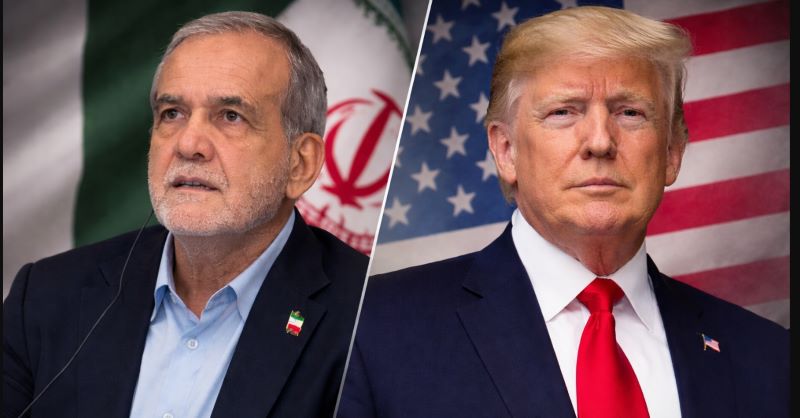
President Masoud Pezeshkian warned that Iran’s opponents could exploit public frustration.
He suggested that another wave of nationwide protests could target the Islamic Republic.
“The current war is more complex than before,” Pezeshkian said.
He added that the enemy seeks to create collapse from within Iran.
Therefore, Tehran now faces both external military pressure and domestic economic challenges.
IRGC Issues Fresh Warning to the US
However, Iran’s military rhetoric has hardened in recent days.
The IRGC warned that any renewed attack could trigger wider retaliation.
IRGC spokesman Hossein Mohebbi issued the warning on Wednesday.
He said Iran could target energy infrastructure and power systems if threatened again.
Mohebbi also mentioned internet-linked infrastructure and other systems.
He further claimed that the US military presence in the Persian Gulf had declined.
According to him, no US warship currently remains in the Persian Gulf.
He also claimed that shortages of air defence missiles threaten US military planners.
Iran Seeks Stronger Ties With China
Meanwhile, Iran’s new security chief, Rezaei, met China’s envoy to Tehran on Tuesday.
The meeting marked one of Rezaei’s first engagements as Supreme National Security Council secretary.
Chinese envoy Cong Peiwu led the delegation.
Rezaei called for stronger cooperation between Tehran and Beijing.
He also praised China’s opposition to US-backed resolutions targeting Iran at the United Nations.
Furthermore, he said any agreement with Oman over the Strait of Hormuz remains separate from Washington.
Strait of Hormuz Tensions Continue
Despite diplomatic efforts, an agreement with Oman appears unlikely in the immediate future.
Military activity continues around the Strait of Hormuz and nearby waterways.
The Red Sea and Bab al-Mandeb Strait have also witnessed rising maritime tensions.
A merchant vessel reportedly came under projectile attack off Oman on Sunday night.
The incident occurred as authorities announced Rezaei’s appointment.
Meanwhile, Iran-aligned Houthi forces launched another deadly maritime attack on Tuesday.
The attack reportedly struck an Egyptian-owned vessel in the Red Sea.
Six people reportedly died in the incident, according to Yemen’s internationally recognised government.
US Forces Attack Vessel
The US military also reported another maritime operation on Tuesday night.
According to the US military, a Navy helicopter fired two Hellfire missiles at a Panama-flagged vessel.
The operation sought to enforce Washington’s naval blockade of Iran’s southern ports.
The attack marked the 12th vessel targeted by US forces since April.
It also represented the third attack since the blockade resumed nearly one month ago.
The blockade followed the collapse of a memorandum of understanding between Iran and the US.
Mediators Continue Diplomatic Efforts
Meanwhile, mediators are still seeking a diplomatic solution to the conflict.
Pakistan and Qatar have reportedly continued efforts to bring Tehran and Washington closer.
The 60-day period under the repeatedly violated agreement will approach its deadline next week.
However, military tensions continue to complicate diplomatic efforts.
Iranian officials have also maintained that they can sustain resistance against the US and Israel.
Iran Sets Conditions for Strait Reopening
Former IRGC commander-in-chief Mohsen Rezaei also restated Tehran’s conditions.
He said the Strait of Hormuz would remain closed until Iran’s demands receive attention.
Rezaei said the US must end the war and blockade.
He also demanded the release of Iran’s frozen assets.
Additionally, he called for a region-wide ceasefire covering Lebanon and Gaza.
His position reflects the broader stance of Iran’s newly appointed military leadership.
For now, Tehran appears determined to maintain its military posture.
At the same time, diplomatic efforts continue as tensions spread across the region.