



 By
By By Elizabeth Ugbo
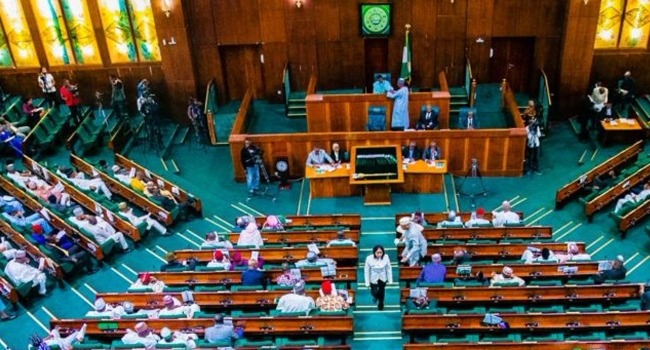
The House of Representatives on Thursday passed a constitutional amendment bill seeking to establish state police across Nigeria. The lawmakers approved the proposal during plenary in Abuja as part of the ongoing constitutional review process. The bill aims to create a dual policing system to tackle insecurity, including banditry, kidnapping, and terrorism. The proposal received overwhelming support from members during a manual vote and now moves to the next stage of legislative approval.
House Approves State Police Bill
News Point Nigeria reports that the bill, titled “A Bill for an Act to Alter the Constitution of the Federal Republic of Nigeria, 1999 to Provide for the Establishment of State Police and for Related Matters (Sixth Alteration) Bill, 2026,” scaled through during consideration at the Committee of the Whole.
The Deputy Speaker of the House and Chairman of the House Committee on Constitution Review, Benjamin Kalu, presented the report before lawmakers voted on the proposal.
A manual voting process showed strong support for the bill. A total of 289 lawmakers voted in favour, one member abstained, while none voted against the amendment.
Proposed Dual Policing Structure
The amendment seeks to establish two policing formations: the Federal Police and the State Police.
Under the proposal, Section 214 of the Constitution will be amended to formally recognise both policing structures.
The National Assembly will determine the structure, administration, and powers of the Federal Police. It will also set minimum standards for creating and operating state police services.
Conditions for Establishing State Police
The bill provides that no state police formation can begin operations without a law passed by the relevant State House of Assembly.
In addition, the proposed police service must meet national standards established by the National Assembly before receiving approval.
The Federal Police will continue operating in any state until the state police structure becomes fully functional.
Federal Intervention Limited
The amendment introduces safeguards to prevent abuse and undue interference.
Under the proposal, the Federal Police may intervene in state policing only under specific conditions. These include a breakdown of law and order, a request from a governor, or situations where a state police force cannot function effectively due to administrative, financial, or operational challenges.
Changes to Police Leadership Structure
The bill also proposes significant changes to police leadership and command structures.
The Inspector-General of Police will be appointed by the President based on the advice of the Nigeria Police Council. The appointment must also receive Senate confirmation.
Similarly, a governor will appoint a State Commissioner of Police on the advice of the Nigeria Police Council. The relevant State House of Assembly must approve the appointment.
Furthermore, governors will have the authority to issue lawful directives to State Commissioners of Police on matters relating to public safety and order.
However, if a directive appears unlawful or inconsistent with policing standards, the matter can be referred to the Nigeria Police Council for a final decision.
Constitutional Amendment Process Continues
The amendment also revises Section 84 of the Constitution. It replaces references to the National Police Council and the Federal Police Service Commission with the Nigeria Police Council and the Police Service Commission.
Although the House has approved the bill, it has not yet become law.
The Senate must pass the amendment. Thereafter, at least two-thirds of State Houses of Assembly must endorse it. Finally, the President must grant assent before the proposal becomes law.
State Police Debate Reignited
The passage of the bill marks a significant milestone in Nigeria’s constitutional review process.
If enacted, the legislation will establish a decentralised policing framework designed to strengthen local security responses. Supporters believe the system will improve efforts against banditry, kidnapping, terrorism, and other security threats across the country.
The development has also revived national discussions about whether state police can provide a more effective solution to Nigeria’s security challenges.