




 By
By By Elizabeth Ugbo
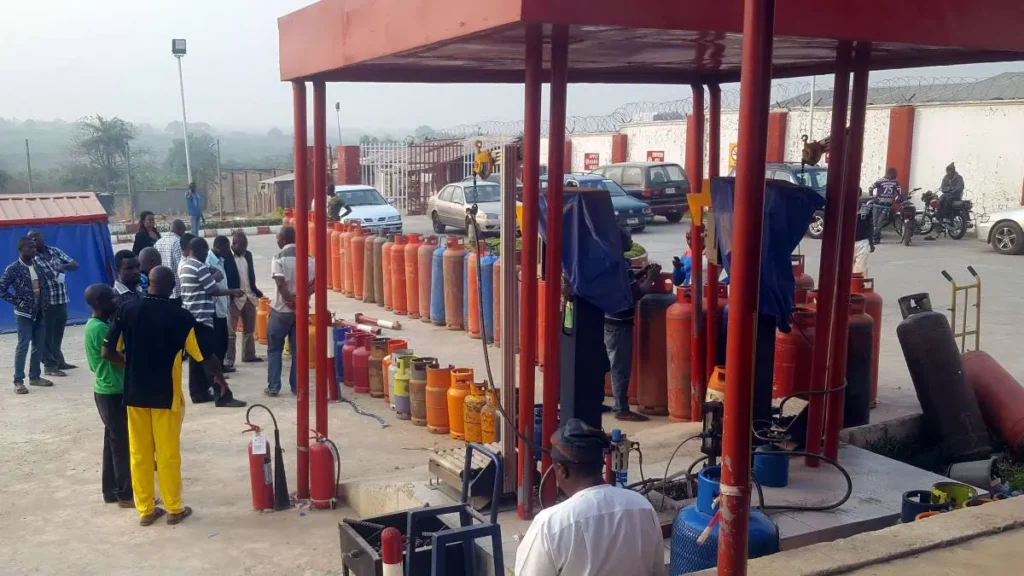
Millions of Nigerians face rising cooking gas costs ahead of the 2026 Eid-Al-Kabir celebrations as Liquefied Petroleum Gas (LPG) prices surge across the country. The Nigerian Association of Liquefied Petroleum Gas Marketers (NALPGAM) raised the alarm on Sunday, warning that erratic supply, increasing wholesale costs, and worsening market conditions could trigger scarcity, deepen hardship for households and businesses, and reverse gains made under Nigeria’s clean energy transition agenda.
Cooking Gas Prices Rise Sharply Across Nigeria
A market survey showed that cooking gas prices, which recently traded below N1,000 per kilogramme, have climbed to between N1,500 and N1,800 per kilogramme in many locations nationwide.
Consumers in South-West Nigeria reported paying close to N1,700 per kilogramme. Meanwhile, residents in Kano, Kaduna, Katsina, and Jigawa states said prices now range from N1,800 to N2,000 per kilogramme.
The increase marks the first major LPG price hike of 2026 and the second significant jump within seven months.
Marketers Blame Supply Challenges and Rising Costs
In a statement jointly signed by NALPGAM National President Edu Inyang and Executive Secretary Bassey Essien, the association described the situation as troubling.
According to the marketers, operators now pay between N25.2 million and N26.2 million for 20 metric tonnes of LPG, depending on location.
The association stated:
“Nigerians now buy cooking gas, which should remain a social commodity, at over N1,500 per kilogramme, while marketers face extremely high procurement costs.”
NALPGAM warned that continued increases may fuel public frustration and place additional pressure on filling station operators.
Households and Small Businesses Under Pressure
The association said the rising cost of LPG has already created severe hardship for households, food vendors, and small businesses that depend on cooking gas daily.
It added that the trend threatens years of investment and policy efforts aimed at increasing LPG adoption and promoting clean cooking energy.
NALPGAM noted that many families now struggle to refill cylinders, while some businesses face closure because of escalating energy expenses.
As a result, several households have reportedly returned to firewood and charcoal despite concerns over public health, environmental degradation, and deforestation.
Fear of Scarcity During Eid-Al-Kabir Holiday
Apart from higher prices, residents in several communities reported growing difficulty finding cooking gas at retail outlets.
The concerns emerged as the Federal Government declared Wednesday, May 27, and Thursday, May 28, 2026, as public holidays for Eid-Al-Kabir celebrations.
Marketers warned that failure to stabilise prices and supply could lead to:
- Accelerated food inflation
- Closure of small LPG retail businesses
- Job losses across the value chain
- Reduced investor confidence
- Slower progress toward Nigeria’s clean energy targets
Consumers Demand Government Intervention
Reacting to the development, consumer Ibrahim Musa criticised the rising cost of living.
He said affordable cooking gas remains one of the few direct ways government policies can ease pressure on ordinary Nigerians.
Consumers and marketers have now called on the Federal Government to urgently intervene and restore stable LPG supply and pricing before conditions worsen further.