



 By
By By Elizabeth Ugbo
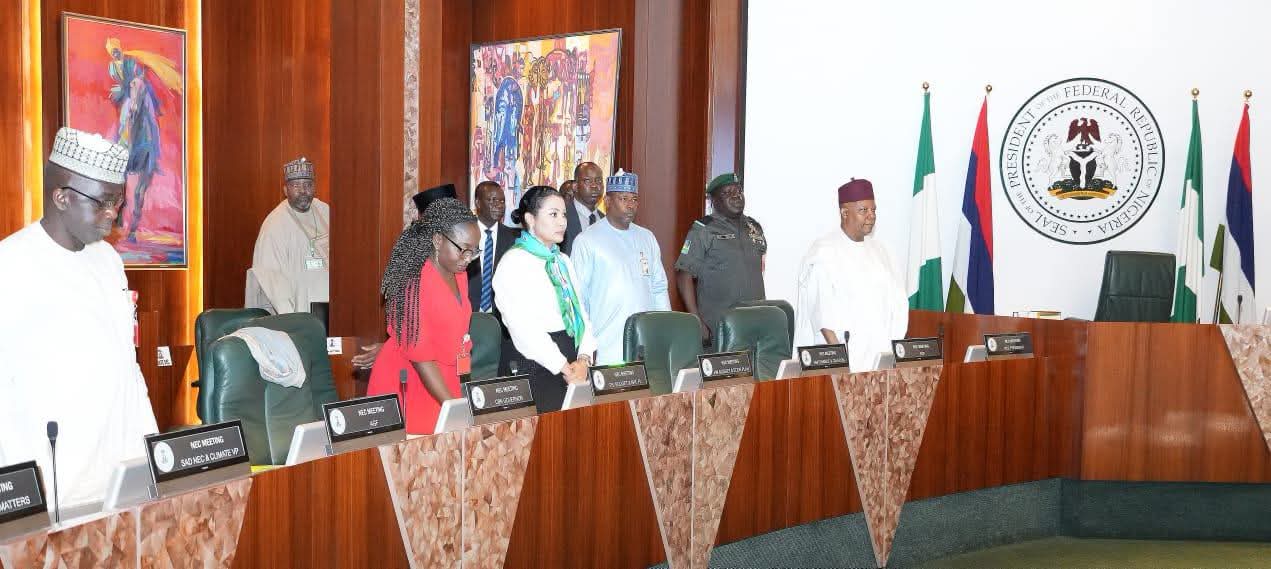
The National Economic Council (NEC) has approved N83.2 billion to reduce the impact of flooding and other climate-related emergencies across Nigeria. The approval came on Thursday during the 158th NEC meeting, chaired by Vice President Kashim Shettima, following a presentation by Minister of State for Budget and Economic Planning, Senator Atiku Bagudu. The fund will support the Anticipatory Action Task Force (AATF) in preventing disasters before they occur and protecting vulnerable communities during the rainy season.
NEC Prioritises Proactive Flood Response
The Council approved the intervention fund after reviewing the increasing threat of flooding across the country. Members agreed that Nigeria must adopt proactive disaster management instead of responding only after emergencies occur.
The intervention will enable the Anticipatory Action Task Force to strengthen preparedness and reduce the effects of floods and other climate-related disasters.
Shettima Demands Results From Tinubu’s Reform Agenda
Vice President Shettima said President Bola Ahmed Tinubu’s economic reforms must deliver measurable benefits to Nigerians.
He stressed that government policies should improve the lives of farmers, manufacturers, vulnerable citizens, unemployed youths and future generations.
“When this Council last met, I called our economy a workshop. A place of measurement and correction. A place where plans become systems, and systems become institutions before they become prosperity,” he said.
According to him, the Council must now focus on tangible outcomes rather than policy discussions.
States Urged to Boost Agricultural Exports
The Vice President urged state governments to collaborate with the Federal Government to remove logistical and regulatory barriers affecting agricultural exports.
He said Nigeria’s economic growth depends on building a complete value chain that connects farms, factories, ports and international markets.
“We cannot continue to export raw materials and import finished prosperity,” Shettima said.
Nigeria Must Improve Port Efficiency
Shettima identified inefficient port operations and export compliance challenges as major obstacles to Nigeria’s participation in global trade.
He said improving port processes and meeting international standards would increase farmers’ incomes, strengthen local manufacturers and expand export opportunities.
“A nation that cannot move its goods has imprisoned its own farmers. Meeting international standards is the price of accessing markets that reward our labour,” he added.
Social Protection Remains a National Priority
The Vice President also described social protection as a key pillar of national development.
He said government programmes should protect vulnerable Nigerians while strengthening human capital across the federation.
According to him, no Nigerian should be left behind as the country moves from economic stabilisation to sustainable production and growth.
NEC Pushes for Coordinated National Development
Shettima said Nigeria is transitioning from economic stabilisation to implementation through coordinated national policies.
He added that stronger collaboration between the Federal Government and states remains essential to achieving lasting economic growth, improving disaster preparedness and expanding Nigeria’s presence in global markets.