



 By
By By Elizabeth Ugbo
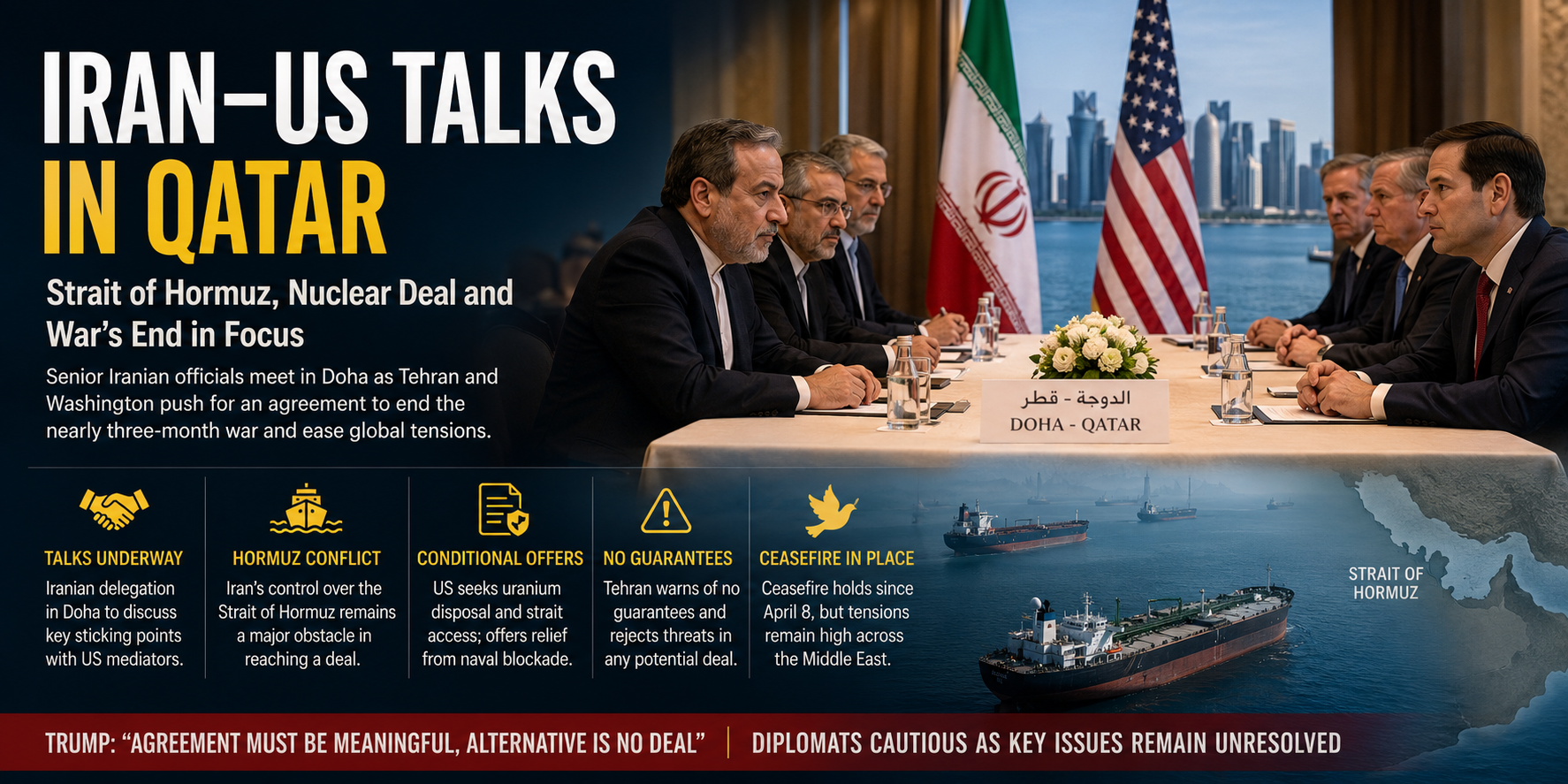
Iranian and US officials met in Doha, Qatar, on Monday to negotiate a potential agreement over the Strait of Hormuz and Iran’s nuclear and maritime restrictions, as mediators push to end the ongoing Iran–Israel conflict and ease global economic pressure through diplomatic talks, with both sides using regional leverage and conditional proposals to reach a settlement.
Qatar Hosts High-Stakes Iran–US Negotiations
Iran sent a senior delegation to Doha, Qatar, for fresh discussions with US-linked mediators.
The talks focused on ending the nearly three-month conflict involving Iran and Israel.
They also addressed shipping access through the Strait of Hormuz.
The US and Iran aim to reduce regional tensions and stabilize global trade routes.
Iran’s delegation included Foreign Minister Abbas Araghchi, Parliament Speaker Mohammad Bagher Ghalibaf, and Central Bank Governor Abdolnaser Hemmati.
Strait of Hormuz Remains Key Sticking Point
The Strait of Hormuz continues to dominate negotiations.
Iran maintains influence over the strategic waterway.
This control gives Tehran significant leverage over global energy flows.
Omar Rahman of the Middle East Council on Global Affairs described Iran’s position as powerful.
He said Iran has gained leverage through its role in global shipping routes.
Mixed Signals From Washington and Tehran
US and Iranian officials have issued conflicting statements on progress.
A senior US official told Reuters that Iran agreed in principle on key conditions.
These include disposing of highly enriched uranium and easing maritime restrictions.
However, US Secretary of State Marco Rubio urged caution.
He said Washington expects either a strong deal or alternative action.
Iranian Foreign Ministry spokesman Esmaeil Baghaei said both sides reached partial understanding.
He warned that a final agreement is not close.
Trump Administration Maintains Pressure
US President Donald Trump stated that any blockade would continue until a formal agreement is signed and verified.
He emphasized strict enforcement of US conditions on Iran.
Trump also claimed earlier that negotiations had made significant progress.
However, he offered no final confirmation of a deal.
Ceasefire Holds but Tensions Continue
Iran and Israel have observed a ceasefire since April 8.
Despite this, tensions remain high across the region.
The US continues to enforce pressure through naval restrictions on Iranian ports.
Iran insists it will not accept threats or unreliable commitments.
Officials say guarantees remain a major obstacle in any final agreement.
Outlook for Iran–US Agreement
Both sides continue indirect and direct diplomatic engagement.
Mediators are pushing for a broader settlement.
Key disputes remain unresolved, especially maritime access and sanctions relief.
Officials on both sides acknowledge progress but avoid confirming a breakthrough.