



 By
By By Elizabeth Ugbo
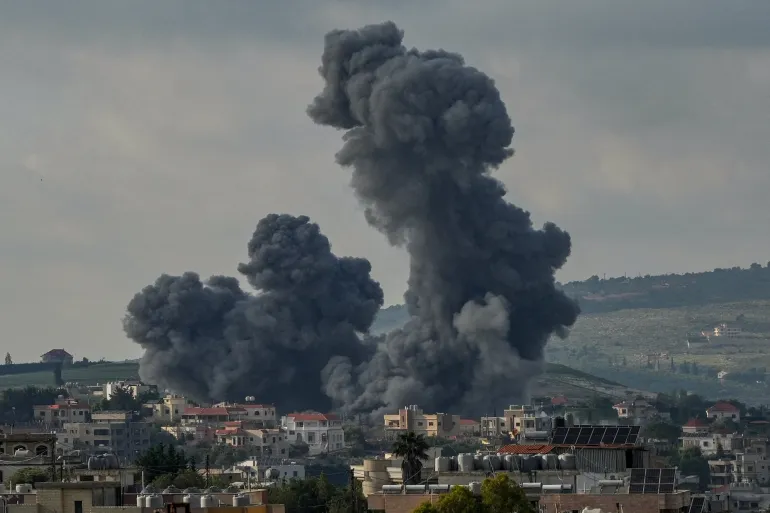
At least 12 people, including three Lebanese army officers, were killed on Saturday when Israeli forces carried out attacks across southern Lebanon. The strikes hit the Khardali-Nabatieh road and other locations in the region. The incident occurred days after Lebanon and Israel agreed to a conditional ceasefire through United States-mediated talks. Lebanese authorities, regional governments, and Hezbollah condemned the attacks, while Israel said its military was operating in an active combat zone.
Lebanese Army Officers Among Victims
The Lebanese army confirmed that Brigadier General Wassam Sabra, Captain Elie Khoury, and soldier Hussein Ghozal died when an Israeli strike hit a military vehicle on the Khardali-Nabatieh road.
Military officials said the repeated attacks threaten ongoing efforts to secure stability and maintain the ceasefire arrangement.
According to the army, the continued Israeli operations aim to undermine attempts to reach a lasting solution in southern Lebanon.
Lebanon Condemns Israeli Attacks
Lebanese President Joseph Aoun described the strike as a flagrant violation of Lebanon’s sovereignty and international law.
Prime Minister Nawaf Salam also condemned the attack. He called it a heinous crime against Lebanon and its people.
Salam extended condolences to the families of the fallen officers and expressed support for the Lebanese Armed Forces.
Regional Countries React
Several Middle Eastern countries strongly criticized the attacks.
Saudi Arabia condemned what it called continuing Israeli aggression against Lebanon. The kingdom reaffirmed its rejection of actions targeting Lebanese sovereignty and the national army.
Jordan described the strike as a blatant breach of international law. The country also called for an immediate halt to Israeli military operations in Lebanon and urged both sides to strengthen the ceasefire agreement.
Similarly, Qatar labeled the attack a dangerous escalation. Doha urged the international community to pressure Israel to stop repeated attacks and fully implement United Nations Security Council Resolution 1701.
Hezbollah and Iran Accuse Israel of Escalation
Hezbollah described the strike as a heinous crime. The group accused the Lebanese government of exposing the country to further bloodshed by yielding to external pressure.
Meanwhile, Iranian Foreign Ministry spokesperson Esmaeil Baghaei condemned the attack. He argued that the killings demonstrated Israel’s hostility toward Lebanon’s security, stability, and sovereignty.
Baghaei also described the strike as a clear act of aggression against the Lebanese state and its armed forces.
Israeli Military Responds
The Israeli army stated that the strike occurred in an active combat zone.
Military officials said movement within the area required prior coordination with Israeli forces. They added that authorities had launched an investigation into the incident.
Lebanese Army Chief Heads to Pakistan
Following the attacks, Lebanese army commander General Rudolf Haykal departed for Pakistan.
Haykal is expected to meet with Pakistan’s Chief of Army Staff, Field Marshal Asim Munir.
The visit comes as Pakistan continues diplomatic efforts to support negotiations aimed at reducing tensions linked to the wider regional conflict involving Iran, Israel, and the United States.
Ceasefire Faces Fresh Challenges
The latest attacks have raised concerns about the durability of the recently negotiated ceasefire.
Lebanese officials argue that continued military operations threaten efforts to restore calm. Regional governments have also warned that further escalation could destabilize the wider Middle East.
As investigations continue, diplomatic pressure is likely to increase on all parties to prevent a return to broader conflict.