



 By
By By Elizabeth Ugbo
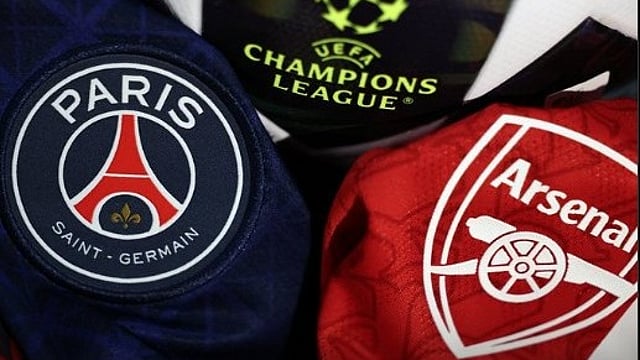
Paris Saint-Germain and Arsenal will clash in the UEFA Champions League final on Saturday at the Puskas Arena in Budapest. PSG aim to defend their European crown, while Arsenal seek their first-ever Champions League title. The highly anticipated showdown brings together two of Europe’s best teams after impressive campaigns. Fans across the world will watch closely to see who emerges victorious and why their tactical approach could decide the outcome.
Arsenal’s Deadly Set-Piece Weapon
Arsenal have become one of Europe’s most dangerous teams from set-piece situations.
The Premier League champions often struggle to create clear chances from open play. However, they consistently punish opponents from corners and free-kicks.
Defender Gabriel Magalhaes remains a major aerial threat. Meanwhile, set-piece coach Nicolas Jover has transformed Arsenal into a dead-ball powerhouse.
Nearly 40 percent of Arsenal’s league goals this season came from set pieces.
PSG coach Luis Enrique acknowledged Arsenal’s effectiveness.
“People may say they don’t score team goals, but who cares?” he said. “Arsenal fans are delighted with the results.”
PSG goalkeeper Matvey Safonov could face intense pressure from Arsenal’s physical attackers throughout the final.
Luis Enrique’s Tactical Flexibility
Luis Enrique has shown his ability to adapt during crucial matches.
PSG thrilled fans with a 5-4 first-leg victory over Bayern Munich in the semi-finals. However, the Spanish coach adopted a more cautious approach in the return leg.
That tactical adjustment helped PSG secure a 1-1 draw and reach the final.
Now, Enrique plans another strategic shift against Arsenal.
“We’ll have to adapt our play and defending if we want to beat them,” he said.
PSG’s preparation has included detailed analysis of Arsenal’s strengths and weaknesses.
The French champions have already scored 44 goals in this season’s competition. They need just one more to equal Barcelona’s record of 45 goals, set during the 1999-2000 campaign.
Arsenal Face PSG’s Dangerous Left Flank
One of Arteta’s biggest challenges involves stopping PSG’s left-sided attacks.
Khvicha Kvaratskhelia has enjoyed a remarkable tournament. The Georgian winger has scored 10 goals and delivered several match-winning performances.
Behind him, Nuno Mendes provides constant support with powerful overlapping runs.
Arsenal welcome the return of Jurrien Timber from a groin injury. Nevertheless, Arteta must decide whether to start him immediately.
Alternatively, Cristhian Mosquera could fill the right-back role.
Declan Rice has also played there recently. However, Arsenal need his presence in midfield against PSG playmaker Vitinha.
Fatigue Could Influence the Final
Player workload may play a significant role in Budapest.
Several Arsenal stars have exceeded 4,000 minutes this season. Declan Rice, William Saliba, Gabriel Magalhaes, Martin Zubimendi, and David Raya have all carried heavy workloads.
Arteta has relied heavily on a consistent starting lineup.
Despite concerns, the Arsenal manager refuses to use fatigue as an excuse.
“That’s the context and the scenario. We have to embrace it and enjoy the opportunity,” he said.
In contrast, PSG have benefited from squad rotation. Their early Ligue 1 title triumph allowed Luis Enrique to rest key players regularly.
Only Willian Pacho, Vitinha, and Warren Zaire-Emery have surpassed 3,000 minutes this season.
“Rest is also an integral part of preparation,” Enrique explained.
Arsenal’s Defence Against PSG’s Attack
The final may come down to a battle between PSG’s attack and Arsenal’s defence.
Arsenal remain unbeaten in the competition and have conceded only six goals.
Goalkeeper David Raya has recorded nine clean sheets, matching the tournament record.
In front of him, Gabriel and William Saliba have formed one of Europe’s strongest defensive partnerships.
Their task becomes even tougher against Ballon d’Or winner Ousmane Dembele, Kvaratskhelia, and Desire Doue.
Meanwhile, PSG’s attack has terrorised opponents throughout the tournament.
That contrast sets up a fascinating contest between attacking flair and defensive discipline.
Final Verdict
PSG enter the final as defending champions with one of Europe’s most potent attacks. Arsenal arrive with confidence after ending their 22-year wait for a Premier League title.
Both teams possess distinct strengths. Arsenal rely on defensive solidity and set-piece excellence. PSG depend on creativity, speed, and tactical flexibility.
As a result, fine margins could decide who lifts the Champions League trophy in Budapest.