




 By
By By Elizabeth Ugbo
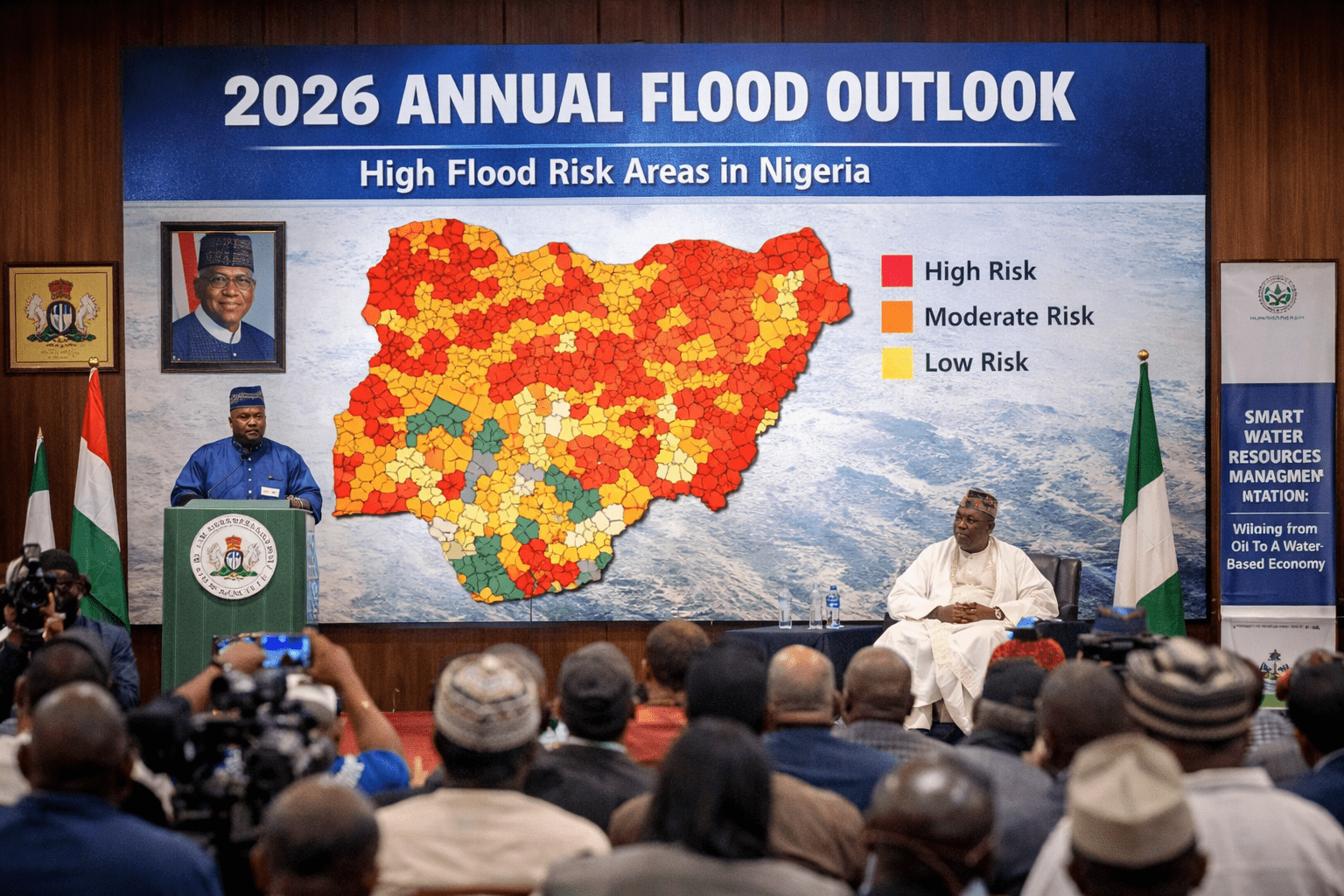
The Federal Government on Wednesday announced that 226 local government areas across 33 states and the Federal Capital Territory face high flood risk in 2026, during the presentation of the Annual Flood Outlook at Aso Villa in Abuja, where Minister of Water Resources and Sanitation, Joseph Utsev, outlined key findings and response strategies.
High Flood Risk Areas Across Nigeria
The government revealed that 14,118 communities fall within high-risk flood zones. These communities span 226 local government areas in 33 states and the FCT.
According to the minister, affected states include Abia, Adamawa, Anambra, Bauchi, Bayelsa, Benue, Borno, Cross River, Delta, Ebonyi, Edo, Enugu, Gombe, Imo, Jigawa, Kaduna, Kano, Kebbi, Kogi, Kwara, Lagos, Nasarawa, Niger, Ogun, Ondo, Osun, Oyo, Plateau, Rivers, Sokoto, Taraba, Yobe, and Zamfara.
Moderate and Low Flood Risk Zones
In addition, 405 local government areas across 35 states fall under moderate flood risk. However, Ekiti State is excluded from this category.
Meanwhile, 923 communities in 77 LGAs across 24 states are expected to experience minimal flooding. These states include Adamawa, Anambra, Bauchi, Bayelsa, Benue, Borno, Cross River, Delta, Ebonyi, Edo, Jigawa, Kaduna, Kano, Kebbi, Kogi, Nasarawa, Niger, Ogun, Ondo, Osun, Oyo, Sokoto, Taraba, and Zamfara.
Introduction of Community-Based Flood Forecasting
This year’s outlook introduces a community-based flood forecasting system. As a result, authorities can now issue location-specific warnings. This approach will improve early response and reduce damage.
Government Strengthens Emergency Response
President Bola Tinubu reaffirmed his administration’s commitment to disaster preparedness. Represented by the Minister of Environment, Balarabe Lawal, he emphasized stronger emergency systems.
He stated that the government has assessed current challenges and recognizes the importance of rescue teams. Furthermore, efforts are ongoing to improve coordination among ministries.
Focus on Sustainable Development and Communication
The President stressed the importance of planning and effective service delivery. He also highlighted communication as a key tool for public awareness and rapid response.
According to him, better coordination will help the country manage disasters more efficiently.
Event Theme and Stakeholder Participation
The event, themed “Smart Water Resources Management: Moving From Oil To A Water-Based Economy,” attracted ministers and key stakeholders. Discussions focused on sustainable water management and flood prevention strategies.