



 By
By By Elizabeth Ugbo
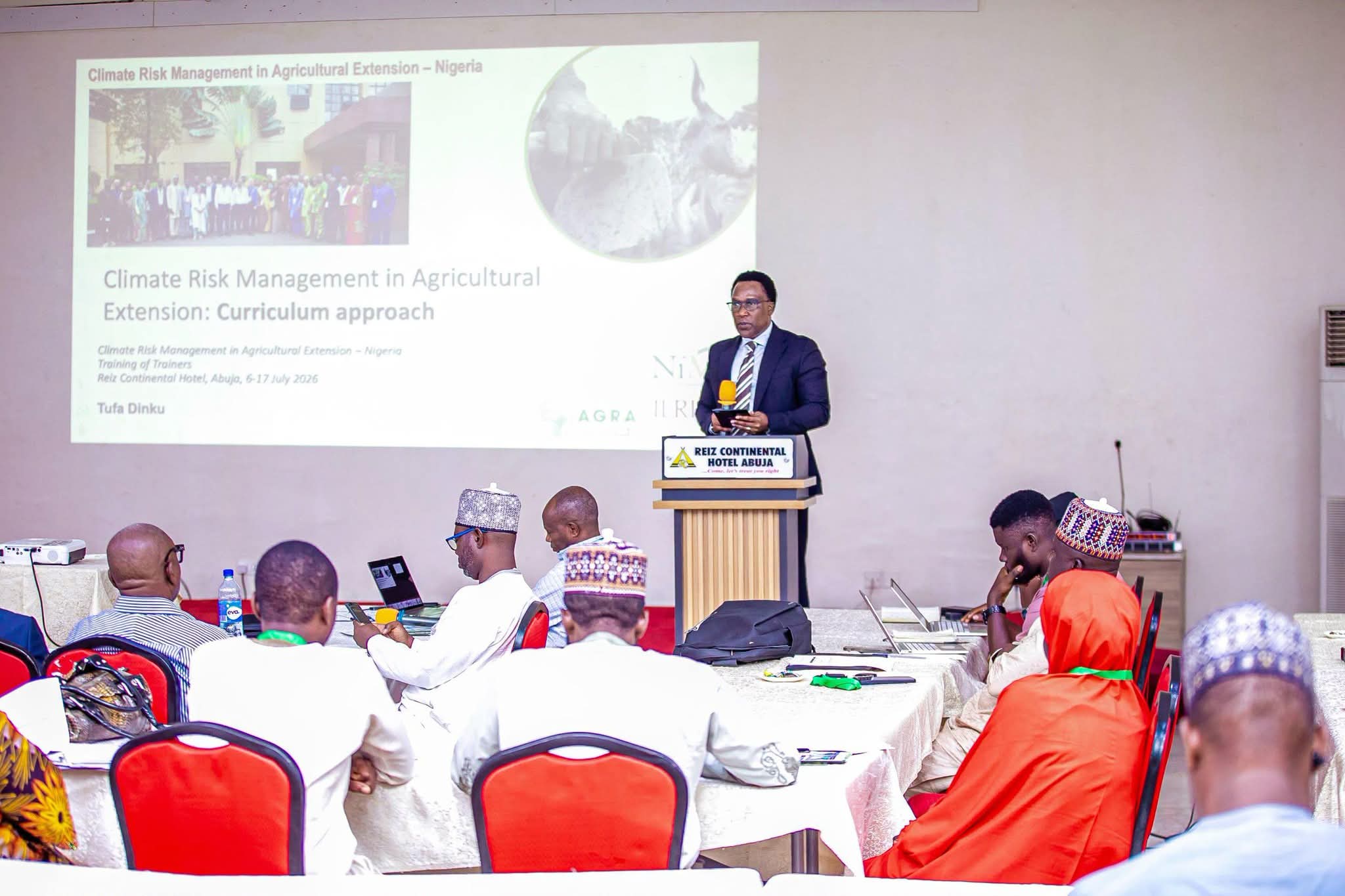
The Nigerian Meteorological Agency (NiMet), in partnership with the International Livestock Research Institute (ILRI), has commenced a 10-day Training of Trainers workshop on Climate Risk Management in Agricultural Extension (CRMAE) in Abuja. The programme, which began on July 6 and will end on July 17, is training agricultural extension professionals to deliver climate information to farmers. The initiative supports climate-smart agriculture, strengthens food security, and improves farmers’ resilience to climate change across Nigeria.
Training Strengthens Climate Advisory Services
The workshop forms part of an Alliance for a Green Revolution in Africa (AGRA) project that aims to strengthen digital climate advisory services across the continent.
Participants will gain practical knowledge and tools to help farmers make informed decisions on planting, water management, crop selection, and disaster preparedness. As a result, they will improve agricultural productivity and reduce climate-related risks.
Experts Highlight Importance of Climate Risk Management
Lead facilitator from the Stockholm Environment Institute, Dr. Tufa Dinku, stressed the importance of the CRMAE curriculum during the opening session.
He explained that NiMet, under the leadership of Prof. Charles Anosike, will coordinate the nationwide implementation of the training programme. According to him, the initiative will improve access to reliable climate information for farming communities.
NiMet Reaffirms Commitment to Climate-Smart Agriculture
Speaking at the workshop, Prof. Charles Anosike, Director-General and Chief Executive Officer of NiMet, said climate change and extreme weather continue to threaten agricultural productivity, food security, and rural livelihoods.
He noted that NiMet remains committed to delivering accurate weather and climate services that support planning, early warning systems, and informed decision-making across agriculture and other weather-sensitive sectors.
Furthermore, he described agricultural extension officers as the crucial bridge between climate science and farmers. He said they play a key role in helping farmers make better decisions on planting dates, crop choices, soil conservation, water use, farm inputs, and disaster preparedness.
Participants Encouraged to Share Knowledge
Prof. Anosike urged participants to actively engage throughout the workshop. He also encouraged them to build professional networks and transfer the knowledge to extension platforms, farmer groups, cooperatives, and rural communities across Nigeria.
He expressed confidence that the training would strengthen climate resilience and support sustainable agricultural development nationwide.