



 By
By By Elizabeth Ugbo
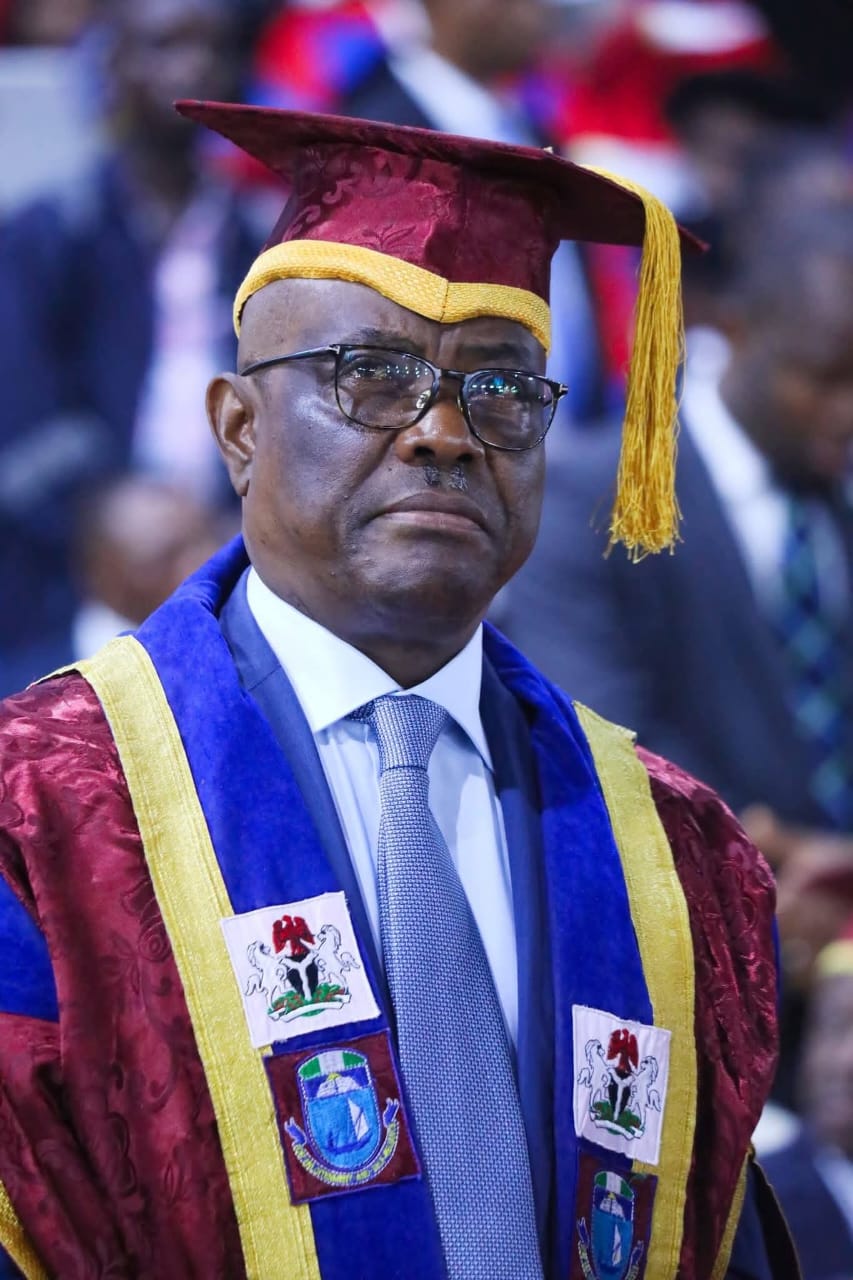
The Minister of the Federal Capital Territory, Nyesom Wike, on Saturday, June 6, 2026, praised President Bola Ahmed Tinubu’s leadership during the 36th Convocation Ceremony of the University of Port Harcourt in Rivers State. Wike said Tinubu’s vision, courage and political will are transforming Nigeria through massive infrastructure development. He explained that the administration is achieving this by investing heavily in roads, railways, power, housing and digital infrastructure across the country.
Wike Highlights Tinubu’s Infrastructure Agenda
Speaking during a lecture titled “Leadership and Infrastructure Development in Nigeria: Lessons for Future Leaders,” Wike said effective leadership remains the key to national development.
According to him, President Tinubu has demonstrated the courage to make difficult decisions and mobilise resources to address Nigeria’s infrastructure deficit.
Wike described the current period as a defining moment for Nigeria. He noted that the administration is creating opportunities to bridge the gap between the country’s vast potential and its historical development challenges.
He said evidence on the ground shows that the President is committed to using infrastructure as a tool for economic transformation.
Major Infrastructure Projects Under Tinubu
Wike identified several flagship projects currently receiving attention from the Federal Government.
These include:
- Lagos-Calabar Coastal Highway
- Sokoto-Badagry Super Highway
- Abuja-Kaduna-Zaria-Kano Road
- East-West Road
- Access roads to the Second Niger Bridge
He stated that these projects will improve connectivity, stimulate economic activities and strengthen national integration.
Railway Expansion and Transport Development
The minister also highlighted ongoing investments in rail transportation.
He cited the rehabilitation of the Port Harcourt-Maiduguri railway corridor and the expansion of standard gauge rail networks.
According to him, these projects will enhance movement of goods and people while boosting economic productivity.
Power Sector Reforms and Energy Transition
Wike commended the administration’s efforts to improve electricity supply nationwide.
He pointed to the Presidential Power Initiative implemented in partnership with Siemens. He also mentioned rural electrification projects and mass metering programmes.
Furthermore, he praised the Presidential Compressed Natural Gas (CNG) Initiative and the National Hydrogen Policy.
He said both programmes position Nigeria to benefit from emerging global energy trends.
Housing, Education and Digital Infrastructure
The minister noted that the government is investing in housing, aviation, broadband infrastructure and security systems.
He also referenced the Nigeria Education Loan Fund (NELFUND), which supports access to higher education for Nigerian students.
According to Wike, these investments will create long-term benefits for citizens and support national development.
Fuel Subsidy Removal Created Fiscal Space
Wike described the removal of fuel subsidy as one of the administration’s boldest economic decisions.
He argued that the policy has increased revenue available to federal, state and local governments.
As a result, governments now have more resources to finance infrastructure and development projects.
He stressed that transformational leadership requires difficult decisions that prioritise long-term national benefits.
Call for Continuity and Sustained Commitment
The former Rivers State governor urged Nigerians to support ongoing development efforts.
He emphasised that infrastructure projects should be evaluated based on completion and impact rather than announcements.
Wike warned that Nigeria cannot achieve its development goals without sustained investments in roads, transportation, power, healthcare and education.
He added that infrastructure development takes time but delivers lasting economic and social benefits.
Leadership Must Deliver Results
Wike concluded that leadership should be measured by tangible outcomes.
He stressed that no nation can rise above the quality of its infrastructure and the commitment of its leaders.
The lecture formed part of activities marking the University of Port Harcourt’s 36th Convocation Ceremony. The event attracted academics, students, alumni, government officials and other dignitaries from across Nigeria.